Published October 20, 2026
How to Identify Inherited Antiques From Photos: A Room-by-Room Checklist
You have just inherited a house, cleared a relative's loft, or taken responsibility for an estate filled with decades—or generations—of accumulated belongings. Among the furniture, boxes, and household items are almost certainly antiques and collectibles, some potentially valuable, others merely sentimental or decorative. The challenge is working out what you have before anything is cleared, sold, donated, or divided among family members.
This guide provides a practical, room-by-room approach to identifying and documenting inherited antiques using photographs. You will learn what not to do before you start, which items to flag in each room and what photos to take, how to build a simple inventory system, warning signs that require specialist attention, and realistic next steps for valuation, sale, or division of items.
The goal is not to turn you into an expert appraiser overnight. It is to help you avoid costly mistakes—throwing away valuable items, accepting lowball offers from house clearance firms, or dividing an estate unfairly because no one knew what things were worth—and to give you the information needed to make informed decisions about each item.
Important Note: This guide covers practical identification and documentation. It is not a substitute for formal probate valuations (required in the UK for estates above certain thresholds) or estate appraisals (required in the US for tax purposes). Those must be performed by qualified valuers. This guide helps you triage inherited items, identify what deserves specialist attention, and avoid disposing of valuable pieces before proper assessment.
Before You Start: What NOT to Do
Before you touch anything, photograph anything, or call any clearance firms, understand these critical rules. Breaking them can destroy value, provenance, and evidence of authenticity.
Do Not Clean, Polish or Repair Anything
The single biggest mistake inheritors make is enthusiastically cleaning inherited items to "tidy them up" or "make them presentable." Do not do this. Original patina, tarnish, dust, and wear are evidence of age and authenticity. Collectors and dealers actively prefer honest, untouched surfaces. Over-cleaning can remove hallmarks, maker's marks, original finishes, and provenance evidence, and can significantly reduce value.
Silver tarnish protects the surface beneath. Furniture patina tells the story of centuries of use. Paintings accumulate varnish yellowing that specialists remove carefully—amateur cleaning with household products can destroy paint layers. Do not polish, oil, wax, scrub, or attempt amateur restoration. Leave everything exactly as found until you know what you have.
Do Not Throw Away Boxes, Papers, or Receipts
Provenance—documented history of ownership and origin—adds value and authenticity. Original boxes, receipts, invoices, letters, insurance policies, old valuation certificates, exhibition labels, and family records are all part of provenance. A watch in its original box can be worth double an unboxed example. A painting with a gallery invoice or exhibition history is more valuable and easier to authenticate than one with no documentation.
Keep every scrap of paper you find in or near antiques: receipts in desk drawers, letters tucked in books, labels on furniture backs, boxes in lofts, insurance inventories from decades past, old photographs showing items in situ. Gather these into labelled folders or envelopes and keep them safe. You can sort relevance later, but you cannot recover discarded provenance.
Do Not Let House Clearance Firms Take Things Unseen
Some house clearance companies offer to "clear everything for a fee" or "clear for free in exchange for saleable items." This can be convenient for genuine rubbish, but it is also how valuable antiques disappear. Unscrupulous operators cherry-pick the valuable items, pay you nothing or a nominal sum, and leave you with the genuine rubbish to dispose of yourself.
Do not allow clearance until you have photographed and inventoried everything of potential interest. If you must use a clearance firm, get multiple quotes, check reviews, and be specific about what stays and what goes. Better still, identify valuable items first using this guide, remove them for separate sale or appraisal, then clear the remainder.
Protect the Site Until You Have Documented It
If the inherited property is empty or vulnerable, ensure it is secure. Antiques theft from estates is common. Fit proper locks, inform neighbours and police if appropriate, and consider insurance if the estate includes known valuables. Do not advertise on social media that a property is empty and full of antiques.
Photograph everything in situ before you move items or start sorting. These photos provide baseline documentation and help resolve disputes about what was where and who said what. Use your phone to shoot wide-angle room views plus close-ups of anything interesting. Cloud backup ensures you do not lose evidence if your phone is lost or damaged.
The Room-by-Room Identification Checklist
Now you understand what not to do, work through the property systematically, room by room. For each room, the checklist below tells you what types of items to flag and what specific photos to take. This is triage—you are not appraising everything, just identifying items that need closer attention or specialist input.
Living Room and Dining Room
What to look for: Furniture (tables, chairs, sideboards, bookcases, display cabinets), clocks (longcase, mantel, bracket), paintings and prints, mirrors, lighting (chandeliers, lamps), ornaments (figurines, vases, sculptures), rugs and carpets.
Photos to take for furniture:
- Full frontal view of the entire piece
- Close-up of any maker's labels, stamps, or marks (often on the back, underside of drawers, or inside doors)
- Construction details: dovetail joints, types of wood, upholstery, feet and leg styles
- Damage or repairs: cracks, missing veneer, replaced parts, woodworm holes
- Hardware: handles, hinges, locks (original or replaced?)
Photos to take for clocks: See our detailed guide on identifying antique clocks from photos. Key shots include the dial (front and any maker signature), case construction, movement plate if accessible, pendulum and weights. Clocks can be highly valuable but also easy to misattribute—specialist input is often worthwhile.
Photos to take for paintings and prints: Full frontal image in good light (avoid glare from glass), close-up of any signature or marks, back of the frame and canvas (labels, gallery stamps, inscriptions), any damage or restoration. See our guide on valuing antique paintings for more detail.
Photos to take for ornaments and decorative items: Front and back, maker's marks or signatures (often on the base or underside), damage (chips, cracks, repairs), scale reference (a coin or ruler in shot so size is clear). Porcelain and china marks are particularly important—see identifying porcelain marks for guidance.
Bedrooms and Dressing Tables
What to look for: Bedroom furniture (wardrobes, dressing tables, chests of drawers), jewellery (in drawers, boxes, or cases), watches (wristwatches, pocket watches), personal items (hairbrushes, compacts, vanity sets—often silver or decorative), textiles (quilts, samplers, vintage clothing), books (first editions, illustrated volumes, sets).
Photos to take for jewellery: Each piece individually, front and back. Close-ups of any hallmarks, maker's marks, or stamps (usually inside rings, on clasps, or on the back of brooches). Photograph gemstones clearly. Do not attempt to test or clean jewellery yourself. See our guide on identifying antique jewellery from photos for specific techniques.
Photos to take for watches: Dial face, case back (hallmarks, serial numbers), movement if the case opens, any original boxes or papers. Watches can be deceptively valuable—vintage Rolex, Omega, Patek Philippe, and others command strong prices even in worn condition, while watch movements and cases carry hallmarks that establish authenticity and value. Read more in our vintage watch identification guide.
Photos to take for silver items: Photograph every piece showing the full item plus extreme close-ups of any hallmarks (the tiny stamps, usually grouped on the underside or inside edges). British hallmarks tell you the maker, date, and place of assay. See our guides on silver hallmarks and reading maker's marks.
Kitchen, Pantry and Utility Rooms
What to look for: Kitchenware (copper pans, ceramic storage jars, enamelware), glassware (cut glass, coloured glass, decanters), tableware and cutlery (silver, silver-plate, EPNS, stainless with maker marks), Tins and packaging (vintage advertising tins are collectible), small appliances (early electric or mechanical items can be collectible).
Photos to take: Overall view of item, maker's marks or labels, condition (dents, wear, rust, chips). Kitchen antiques are often undervalued—copper, brass, and early enamelware have strong collector markets. Hallmarked silver cutlery has scrap value at minimum and potentially much more if it is a desirable pattern or maker.
Loft, Garage and Shed
What to look for: This is where treasure and junk coexist. Look for: Stored furniture (often higher-quality pieces put away for space reasons), trunks and suitcases (check inside—they often contain textiles, letters, photographs, or small valuables), tools (vintage hand tools, especially pre-war British or American planes, chisels, saws), toys (pre-1990s toys, especially boxed or in good condition—see our guide on valuable 1980s toys), sporting goods (vintage fishing tackle, golf clubs, tennis rackets), militaria (uniforms, medals, weapons—be cautious, some items are restricted), and boxes of collectibles (stamps, coins, postcards, cigarette cards).
Photos to take: Everything as found before you sort. Photograph boxes in situ, then photograph contents after opening. Lofts are dusty and dark—use your phone torch and take multiple shots to ensure clarity. Many valuable collections are discovered in lofts, but also much genuine rubbish. Do not assume everything is worthless just because it looks scruffy.
Desks, Studies and Paperwork
What to look for: Writing furniture (desks, bureaus, writing slopes), desk accessories (inkwells, letter openers, paperweights—often silver or decorative), books (first editions, illustrated, leather-bound sets, signed copies), stamps and coins (albums, loose collections—see our guides on identifying stamps and identifying coins), documents and letters (historic, celebrity, or significant events), maps and prints (framed or rolled).
Photos to take: Photograph each album or collection as a whole, then representative pages or items in detail. Do not remove stamps from albums or coins from mounts—this can damage them. Documents should be photographed flat, readable, with any signatures or notable names visible.
Display Cabinets and China Collections
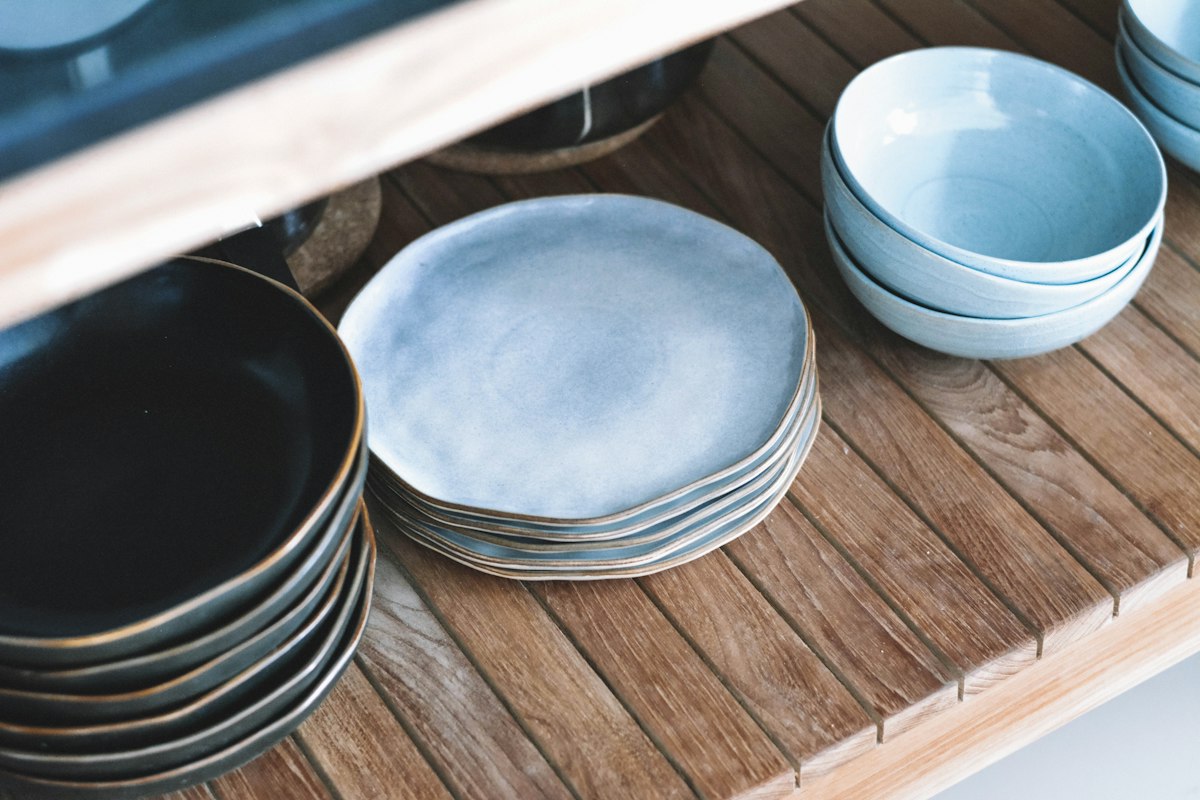
What to look for: Fine china and porcelain (dinner services, tea sets, figurines, decorative plates), glass (cut glass, art glass, coloured glass, studio glass), silver and silver-plate (tea services, trays, bowls, candlesticks), collectibles (limited editions, commemoratives—these are often less valuable than hoped but worth checking).
Photos to take: Photograph the entire cabinet or shelf first, showing the collection as a whole. Then photograph each significant piece individually: front, back, underside (for maker's marks), damage, and decorative details. China and porcelain marks are the key to identification—see identifying porcelain marks. Glass is harder to identify without marks, but form, colour, and style provide clues—Art Deco glass, for example, has distinctive styles covered in our Art Deco glass guide.
How to Build a Simple Inventory System

As you work through each room, you need a system to track what you find. A simple inventory prevents items being lost, disputed, or overlooked, and it allows fair division among family members or transparent sale processes.
Numbering and Labelling
Give each item a unique number. Use small sticky labels or tags (archive-quality if possible, or standard sticky notes for short-term use) and write the number clearly on the label. Place labels where they are visible but not damaging—on the base of ceramics, the back of frames, the underside of furniture. For items that cannot be labelled (delicate textiles, loose jewellery), place them in numbered bags or boxes.
Number sequentially: Item 1, Item 2, Item 3, and so on. Alternatively, use room-based numbering (LR1, LR2 for living room; BR1, BR2 for bedroom) if that is easier. The system does not matter as long as it is consistent.
Spreadsheet or Notebook
Create a simple spreadsheet (Excel, Google Sheets) or use a paper notebook. For each item, record:
- Item number: The label number
- Room: Where it was found
- Description: What it is (e.g., "mahogany dining table," "silver pocket watch," "oil painting of landscape")
- Maker/marks: Any visible signatures, hallmarks, labels, or stamps
- Photos: Note the file name or number of the photo (your phone will timestamp or number them automatically)
- Condition: Excellent / Good / Fair / Poor, plus notes on damage or faults
- Estimated value: Leave blank initially, fill in as you research
- Next step: Keep / Sell / Donate / Specialist appraisal / Disputed (needs family discussion)
This spreadsheet becomes the master record. Share it with family members so everyone sees what exists and can discuss division or sale fairly. Cloud storage (Google Sheets, Dropbox, iCloud) ensures everyone has access and backups are automatic.
Using Antique ID for Quick Initial Assessments
Once you have photographed items, use Antique ID to get quick identifications and estimated value ranges. Upload your photos—furniture, jewellery, silver, paintings, ceramics, clocks, watches, coins, stamps—and the app analyses them using AI, suggesting what the item is, its period or maker, and a realistic value range based on recent comparable sales.
This is triage, not appraisal. The app helps you sort items into rough value bands: negligible (under £20/$20), modest (£20-100/$20-150), respectable (£100-500/$150-750), significant (£500-2,000/$750-3,000), and high value (over £2,000/$3,000). Items flagged as respectable or above deserve closer research or specialist input. Items flagged as negligible or modest can be kept for sentimental reasons, donated, or sold in bulk without much further research.
Add the app's estimated range to your inventory spreadsheet under "Estimated value." Note that these are starting points, not certified appraisals—but they help you prioritize where to spend time and money on professional valuations.
Quick 'Stop and Get a Specialist' Signals
Some items are difficult to value accurately from photos alone or carry high stakes that justify professional input. Here are the red flags that mean "pause and consult a specialist before selling, dividing, or discarding."
Gold or Silver Hallmarks
If you find hallmarks—the small stamped symbols on silver and gold items—photograph them in extreme close-up and research them using our guides on silver hallmarks and maker's marks. British hallmarks tell you the metal purity, maker, date, and assay office. Gold carries significant intrinsic value; silver has scrap value plus collectible premiums for desirable patterns or makers. Get multiple quotes if selling hallmarked items.
Signed Paintings
If a painting carries a signature, research the artist. Some signatures are famous; others are unknown. Do not assume an unknown signature means no value—regional or minor artists still have markets. Equally, do not assume a famous-looking signature is genuine—forgeries exist. For any painting estimated above £500/$750, consult an art specialist or auction house. See our guide on valuing antique paintings.
Clocks and Watches
Antique clocks and watches range from near-worthless to five-figure values, and identification requires specialist knowledge of movements, makers, and condition factors. Our guides on clocks and watches help with initial identification, but for valuable pieces, consult a horologist or specialist dealer.
Jewellery
Jewellery combines intrinsic value (gold, platinum, gemstones) with collectible value (design, maker, period). Costume jewellery can also be valuable if by desirable makers (Trifari, Miriam Haskell, early Chanel). Get any jewellery with obvious gemstones, gold or platinum settings, or signed pieces appraised by a qualified jeweller or specialist. See identifying antique jewellery.
Coins and Stamps
Collections can range from worthless (common used stamps, circulated modern coins) to extremely valuable (rare dates, errors, high grades). Our guides on stamps and coins help you identify potentially valuable items. For significant collections, consult philatelic or numismatic dealers.
Asian Antiques
Chinese, Japanese, and other Asian ceramics, bronzes, paintings, and decorative arts have boomed in value over recent decades. Pieces dismissed as "tourist tat" can be valuable; conversely, modern reproductions abound. If you find items with Asian characters, seals, or motifs, photograph them thoroughly and consult a specialist in Asian art.
Militaria
Military items—uniforms, medals, weapons, documents—have dedicated collector markets. Medals can be researched by recipient name; weapons may be restricted or require licensing. Consult militaria specialists and check legal requirements before selling or moving weapons.
First Editions and Rare Books
First editions of significant works, illustrated books, leather bindings, and signed copies can be valuable. Check title pages for edition information, look for author signatures or inscriptions, and research notable titles online or via antiquarian book dealers.
Value Bands and Next Steps
Once you have documented and roughly valued everything using photos and tools like Antique ID, divide items into value bands and assign appropriate next steps.
Negligible Value (under £20/$20)
Examples: Common mass-produced ceramics, modern reproduction furniture, worn low-quality items.
Next steps: Keep for sentimental reasons, donate to charity shops, or dispose of responsibly. Do not spend time or money trying to sell these—transaction costs exceed value.
Modest Value (£20-100 / $20-150)
Examples: Decent used furniture, collectable but common items, smaller pieces of jewellery or silver.
Next steps: Sell via online marketplaces (eBay, Facebook Marketplace, Gumtree), local antique shops (expect wholesale prices), or car boot sales. Batch similar items to save effort.
Respectable Value (£100-500 / $150-750)
Examples: Quality furniture, silver items, collectibles in good condition, mid-range jewellery or watches.
Next steps: Research sold prices for comparables, sell via specialist dealers or online platforms with detailed listings and good photos. Consider auction houses for higher-end pieces. Photos and descriptions matter—see how to photograph antiques for guidance.
Significant Value (£500-2,000 / $750-3,000)
Examples: Fine antiques, high-quality jewellery, rare collectibles, signed artworks, premium-brand watches.
Next steps: Get professional appraisals or auction house valuations. Sell via specialist auctions or dealers. Insure items while you hold them. Do not accept quick cash offers without multiple opinions.
High Value (over £2,000/$3,000)
Examples: Museum-quality antiques, fine art, rare items, significant jewellery or precious metals.
Next steps: Formal appraisal by qualified experts, consignment to major auction houses, specialist dealers, insurance, secure storage. These items justify spending on professional advice—the cost is a tiny fraction of potential value, and mistakes are expensive.
Understanding the Difference Between Valuers, Auction Houses and Dealers
Valuers/appraisers charge fees to provide written valuations for insurance, probate, or estate tax purposes. They do not buy items. Use accredited valuers (members of professional bodies like RICS, NAVA, or equivalent). Expect to pay hourly rates or per-item fees.
Auction houses sell items on your behalf, taking a seller's commission (typically 10-20% plus VAT/taxes). They provide free pre-sale valuations, market your items to bidders, and handle transactions. Best for mid-to-high value items. Check the house's specialty—regional auction houses suit local antiques, specialist houses suit high-value or rare pieces.
Dealers buy items outright, usually at wholesale prices (40-60% of retail value). This is quick and convenient but yields lower returns than auction or private sale. Use dealers for modest-value items or when speed matters. Get multiple quotes and check dealer reputations.
Beware Lowball Offers and "Clear Everything for Cash" Buyers
Some operators make lowball offers hoping you do not know better. Red flags include pressure to decide immediately ("this offer expires today"), vague valuations ("I'll give you £500 for the lot"), refusal to itemise what they are buying, and offers significantly below your research-based estimates. Always get multiple opinions, take time to research, and trust your instincts—if an offer feels too low, it probably is.
Probate, Estate and Insurance Valuations
This guide helps you identify and triage inherited antiques. It is not a substitute for formal probate or estate valuations required by law in certain circumstances.
UK Probate Valuations
In the UK, executors must report the estate's value to HMRC at open-market value as at the date of death. For valuable items, and especially where inheritance tax may be due, a professional probate valuation from a qualified valuer is strongly recommended and is what HMRC expects to see. Your solicitor or estate administrator will advise on requirements. See GOV.UK guidance on valuing an estate.
US Estate Appraisals
In the US, executors of estates that must file an estate tax return generally need qualified appraisals for significant items. Requirements vary by jurisdiction; consult your estate attorney or executor.
Insurance Valuations
If you are insuring inherited items (whether keeping them or waiting to sell), insurers commonly require professional valuations or receipts for higher-value single items—check your policy for specific thresholds. Insurance valuations are usually higher than market values because they reflect replacement cost, not resale value.
Do not use app estimates or online research for legal, tax, or insurance purposes. Those contexts require qualified professionals who carry liability and meet regulatory standards. Use your photo-based research to identify which items need formal valuations, then engage appropriate professionals.
How Antique ID Fits Into This Process
Throughout this guide, we have mentioned Antique ID as a quick triage tool. Here is exactly how it fits into the inherited antiques workflow:
- Initial documentation: As you work through each room photographing items, upload those photos to Antique ID. The app identifies what each item likely is, suggests a period or maker, and provides an estimated value range based on recent comparable sales.
- Triage and prioritization: Use the app's value estimates to sort items into the value bands above. This tells you which items deserve further research, specialist appraisal, or careful handling, and which can be kept, donated, or sold without much further effort.
- Inventory building: Add the app's identification and value range to your inventory spreadsheet. This gives you a working baseline for all items.
- Family discussions: Share the inventory with family members, using the value estimates to inform fair division or sale discussions. Transparent data reduces disputes.
- Deciding next steps: For high-value items flagged by the app, escalate to professional appraisers or auction houses. For modest-value items, proceed to sale via appropriate channels. For negligible-value items, keep or dispose as appropriate.
Important: The app's estimates are starting points, not certified appraisals. They are based on comparable sales and visible features in photos. They do not replace hands-on inspection for authenticity, condition details invisible in photos, or legal valuations. Use the app to avoid missing valuable items and to allocate your time and resources efficiently—then escalate appropriately based on what it flags.
Common Inherited Antiques Mistakes and How to Avoid Them
Mistake 1: Cleaning Everything Before Assessment
As stated earlier, over-cleaning destroys value. This is so common it bears repeating. Photograph first, research second, clean only if appropriate and only after understanding what you have. Many inheritors enthusiastically polish silver, scrub ceramics, oil furniture, or dust paintings—removing patina, marks, original surfaces, and provenance evidence. Once done, this damage is irreversible.
Mistake 2: Assuming Old Equals Valuable
Age alone does not create value. Plenty of antiques are old, genuine, and nearly worthless because they are common, worn, or out of fashion. Conversely, some 20th-century items (mid-century modern furniture, 1980s toys, designer jewellery) command strong prices despite being relatively recent. Value comes from rarity, condition, demand, and quality—not age alone. Do not sentimentally overvalue items just because they are old.
Mistake 3: Accepting the First Offer
Whether from dealers, auction houses, or online buyers, the first offer is rarely the best. Get multiple opinions, research sold prices for comparables, and take your time. The exception is genuinely low-value items where transaction effort exceeds any marginal gain—but for anything flagged as respectable value or above, shop around.
Mistake 4: Ignoring Paperwork and Provenance
Family stories ("Granny said this came from a stately home") are interesting but not provenance. Provenance is documented history—receipts, letters, photographs, exhibition labels, auction records. Keep and research all paperwork. It can turn a maybe-authentic item into a definitely-authentic one, and that difference can be worth thousands.
Mistake 5: Dividing Items Without Understanding Value
Family division of estates often goes wrong when people assume items are roughly equal in value. One sibling takes the dining table (worth £2,000), another takes the china (worth £200), another takes the paintings (worth £50)—and resentment follows. Use your inventory and research to establish approximate values before division, then divide fairly based on actual worth, not assumptions.
Illustrative Examples: Inherited Antiques Scenarios
Example 1: The Country House Clearance
You inherit a relative's rural cottage, filled with furniture and belongings. Most is ordinary 20th-century furniture, but in the loft you find a Victorian mahogany desk, an oil painting signed by a regional artist, and a box of Victorian silver spoons. Using this guide, you photograph everything, run the photos through Antique ID, and identify the desk as worth £600, the painting £400, and the silver spoons £300. You consult a local auction house, which provides its own pre-sale estimates and agrees to sell the items. The rest of the house contents—modern furniture, kitchenware, books—you sell via online marketplaces or donate. Total recovery from the three items: £1,300, which would have been lost if you had hired a "clear everything" firm.
Example 2: The Family Jewellery Box
Clearing your late mother's dressing table, you find a jewellery box with costume jewellery, a gold wedding ring, a watch, and a brooch. You photograph each item and upload to Antique ID. The app flags the watch as a vintage Omega (value range £800-1,200), the brooch as a Victorian mourning brooch with seed pearls (£200-300), and the gold ring as having scrap value plus sentimental value. You consult a specialist watch dealer and a jeweller, who provide their own valuations and make offers. You sell the watch and brooch, and keep the ring. Without the app and research, you might have sold the lot to a high-street jeweller for scrap value—losing much of its worth.
Example 3: The Stamp and Coin Albums
In a desk drawer you find three albums: one of stamps, one of coins, and one of postcards. You photograph representative pages and run them through Antique ID and our specialist guides. The stamp album turns out to be mostly common used stamps (negligible value), but includes a few Victorian high-value definitives in good condition (£20-50 each). The coin album is mostly circulated modern coins (face value only), but includes a few pre-1947 British silver coins (silver scrap value) and one scarce date (£40). The postcards are Edwardian street scenes, worth £2-5 each to collectors. You sell the better stamps and coins via online philatelic/numismatic platforms, the postcards via eBay, and spend the common material at face value or donate. Total recovery: £300+, which you would have missed if you had binned the albums as "old clutter."
Frequently Asked Questions
Can I identify all inherited antiques myself using photos and apps?
You can identify and triage the majority of inherited items using systematic photography, online research, and apps like Antique ID. This approach helps you avoid disposing of valuable items and prioritize what deserves specialist attention. However, high-value items, unclear attributions, and legal/insurance valuations require professional appraisers or specialists. Use photo-based identification for triage, then escalate appropriately.
Do I need a professional valuation for everything?
No. Professional valuations cost money and are only justified for items above certain value thresholds or for legal/insurance requirements. Use photo-based research to identify which items are potentially valuable, then get professional input for those. For modest or low-value items, DIY research and app-based estimates are sufficient.
Should I sell items individually or as a job lot?
It depends on value. High and significant-value items should be sold individually to maximise returns. Modest-value items can be batched by type ("box of books," "set of china") to save effort. Negligible-value items can be donated or disposed of in bulk. The triage process in this guide helps you decide.
What if family members disagree about who gets what?
A transparent, documented inventory with researched values is your best defence against disputes. Show everyone the spreadsheet, share the photos and app valuations, and divide items by approximate value rather than by assumption. If disputes persist, consider involving a neutral mediator or solicitor, or selling contested items and dividing the proceeds.
How long does it take to inventory an average house?
It depends on the quantity and complexity of belongings. A modest house with typical contents might take one or two full days to photograph and document systematically. A large house packed with antiques and collectibles could take a week or more. Do not rush—missing valuable items because you hurried costs more than the time invested in careful documentation.
Is it worth getting probate valuations even if the estate is below the tax threshold?
In the UK, you still need to declare estate values to HMRC even if below the inheritance tax threshold, but the valuation requirements are less strict. Consult your solicitor or estate administrator. For items you plan to sell, market-based research (as described in this guide) is usually sufficient. For items you plan to insure or keep, formal insurance valuations may be worthwhile.
What should I do with items that have sentimental but no financial value?
Keep them if they matter to you or family members, photograph them for family archives, or pass them to relatives who will appreciate them. Not everything needs to be sold. The inventory process helps you distinguish between financially valuable items (which deserve careful sale decisions) and sentimentally valuable items (which are personal choices).
Can house clearance firms be trusted?
Many house clearance firms are reputable and professional. However, the sector also attracts operators who exploit inheritors' lack of knowledge. To protect yourself: get multiple quotes, check online reviews and references, do not allow clearance until you have inventoried valuable items, be specific about what stays and what goes, and avoid firms that pressure you to decide immediately or refuse to itemise what they are taking. Consider removing valuable items before clearance begins.
Summary and Final Checklist
Inheriting antiques and estate contents is both an opportunity and a responsibility. Done carefully, you can identify valuable items, avoid costly mistakes, divide estates fairly, and make informed decisions about what to keep, sell, or donate. Done hastily, you risk discarding valuable pieces, accepting lowball offers, or creating family disputes.
Final Checklist:
- Do NOT clean, polish, repair, or throw away paperwork before assessment.
- Secure the property and photograph everything in situ before moving items.
- Work through the property room by room, using the checklists in this guide.
- Photograph each item systematically: front, back, marks, damage, scale. See how to photograph antiques.
- Label items with numbers and create an inventory spreadsheet.
- Use Antique ID to get quick identifications and value estimates for triage.
- Assign items to value bands and next steps (keep / sell / donate / specialist appraisal).
- Get professional input for high-value items, unclear attributions, and legal/insurance requirements.
- Get multiple opinions before selling significant items; avoid pressure tactics and lowball offers.
- Divide estates transparently using documented values, not assumptions.
- Keep all provenance documentation and family records.
This process takes time, but it protects value and ensures informed decisions. Whether you ultimately keep, sell, or donate inherited items, you will do so knowing what you had and making choices based on knowledge rather than guesswork.
For ongoing identification needs, keep Antique ID on your phone. Snap any item, get an instant identification and value range, and decide confidently what to do next. It is the fastest way to avoid missing hidden treasures and to triage large estates efficiently. From loft clearances to probate inventories, photo-based identification has never been easier or more accessible.
Identify antiques instantly with AI
Use the Antique ID app to photograph items, uncover their history, and estimate value before you buy or list them for sale.
Download Antique IDRelated articles
- How to Identify Antiques: Expert Tips to Recognize True Value Learn to read wear patterns, understand historical construction techniques, and decode maker's marks to authenticate antiques like a pro.
- How to Photograph an Antique to Identify & Value It Discover expert photography techniques to capture antiques for accurate identification—from lighting and angles to hallmarks that unlock value ranges.
- How to Estimate an Antique's Value From a Photo Master the art of photo-based value estimation for antiques—learn what comparables reveal, how condition affects ranges, and when a photo estimate is enough versus when you need a certified appraisal.
- 7 Best Platforms to Resell for Profit in 2025 Compare eBay, Amazon, Poshmark, and other top marketplaces, plus pro tips to maximise margins on your vintage and collectible finds.
- Antique vs Reproduction: How to Spot the Difference Practical clues that separate genuine antiques from modern reproductions—joinery, wear, marks, materials—and how a clear photo helps you decide what to buy, keep, or skip.