Published September 29, 2026
How to Identify Art Deco Glass From a Photo
Why Art Deco Glass Rewards Careful Photo Evidence
Art Deco glass is one of the most photographed—and most mislabelled—categories in the antique market. Sellers call almost any geometric vase from the early twentieth century "Deco," while genuine pieces from Lalique, Daum, Sabino, Val Saint Lambert, Czech houses such as Moser and Niemen, and the better British and American pressed-glass factories sit next to modern fantasy pieces with no period pedigree.
The difference often lives in details a phone camera can capture: stepped silhouettes, mould seams, acid-etched signatures, colour saturation, pontil treatment, and the crispness of pressed relief. Capture those tells well and identification becomes a research problem instead of a guessing game.
Tools like Antique ID help with that first pass. Upload clear, well-lit photos and the app suggests an identification and a market value range drawn from comparable sales. Treat that range as research help—not a certified appraisal, insurance valuation, or courtroom authentication.
This guide walks through the visual clues collectors use to identify Art Deco glass from photographs, which angles matter most, and the red flags that should trigger extra scrutiny before money changes hands.
What "Art Deco Glass" Actually Means
Art Deco, roughly 1920–1939, followed Art Nouveau's organic curves with geometry, speed, and machine-age confidence. In glass that meant stepped forms, sunburst and zig-zag motifs, frosted and polished contrasts, bold solids (cobalt, amber, amethyst, jade green, black), and stylised figures—gazelles, dancers, skyscrapers—rather than trailing vines.
Not every geometric piece is Deco. Mid-century modern and post-war studio glass borrowed the vocabulary. Victorian pressed glass can look "angular" in a bad photo. Your job is to match silhouette, decoration technique, colour, and marks to the 1920s–30s toolkit—not just to a Pinterest mood board.
High-end Deco glass includes moulded and cire-perdue work by Lalique, cameo and acid-etched pieces from Daum and Gallé's late period, Belgian cut crystal from Val Saint Lambert, Czech luxury colour glass from Moser and related houses, and French opalescent makers such as Sabino and Etling. Mid-market Deco is rich too: British Cloud Glass, Bagley, Davidson, American Consolidated and Cambridge geometrics, and huge volumes of Czech and German pressed export glass.
Silhouette First: Geometry, Mass, and Machine-Age Form
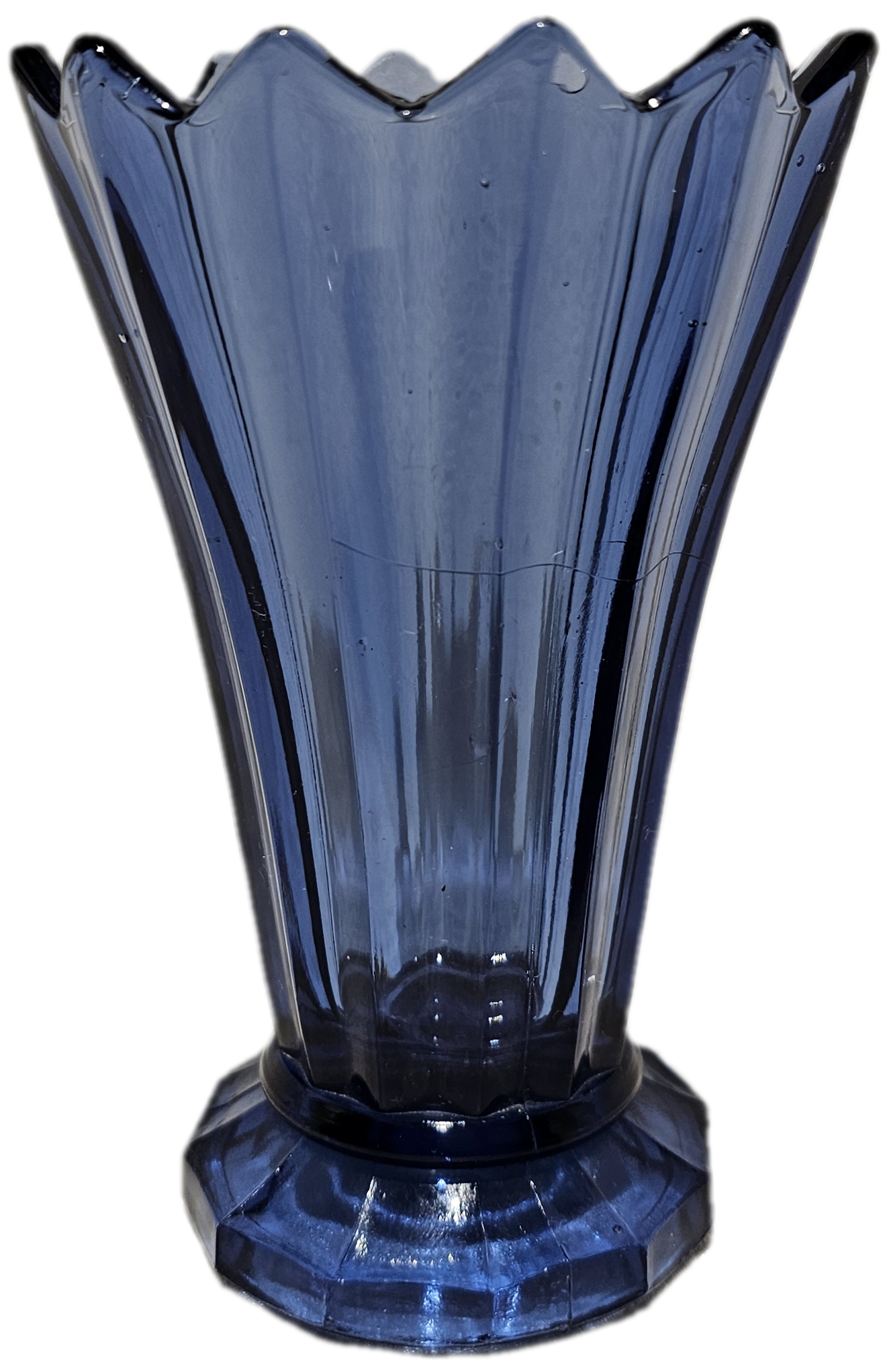
Start with the overall shape. Photograph the piece straight-on against a plain background so proportions are undistorted, then take a three-quarter angle and a straight side profile. Art Deco silhouettes favour:
Stepped and skyscraper forms — tiers that echo architecture, often with flat planes meeting at crisp angles.
Heavy, low centres of gravity — thick walls, substantial bases, and a "machine weight" that feels intentional rather than delicate.
Geometric handles and finials — angular or stylised zoomorphic grips instead of scrolled Victorian ones.
Conical, hexagonal, and octagonal bodies — faceted or moulded into repeating planes.
Measure height and widest diameter if you can, and include a coin or ruler in one context shot. Scale matters: a 12 cm Moser colour vase and a 35 cm Val Saint Lambert architectural piece live in different price bands even when the style language overlaps.
Compare your silhouette against known catalogues and auction archives for the maker you suspect. If the form is vaguely Deco but soft, inflated, or oddly proportioned, you may be looking at a later homage or a fantasy piece designed to look "vintage" on a marketplace thumbnail.
Colour, Opacity, and Surface Finish
Deco glass colour is rarely accidental. Cobalt blue, deep amber, amethyst, jade or uranium green, milk glass, black glass, and frosted clear were signature choices. Photograph colour in diffused daylight—never under warm tungsten alone, which turns cobalt muddy and amber orange.
Take one shot with a white card or paper in frame so you (and any AI tool) can judge true hue. Note whether colour is throughout the glass (solid or cased) or only a surface stain or spray. Period cased and flashed pieces show colour in the break or rim; cheap modern spray colour sits on the surface and chips differently.
Surface finish is a major tell. Lalique and related French moulded glass often combine satin (frosted) and polished areas on the same piece. Opalescent glass shows a milky blue glow when backlit. Uranium glass fluoresces green under UV—useful confirmation, not proof of date by itself, because uranium glass was made before and after the Deco decades.
Photograph both front-lit and backlit views when the glass is translucent or opalescent. That second lighting pass reveals mould detail and colour layering that flat flash hides.
Decoration Techniques: Pressed, Etched, Cut, and Moulded
How the decoration was made is often more diagnostic than the motif itself.
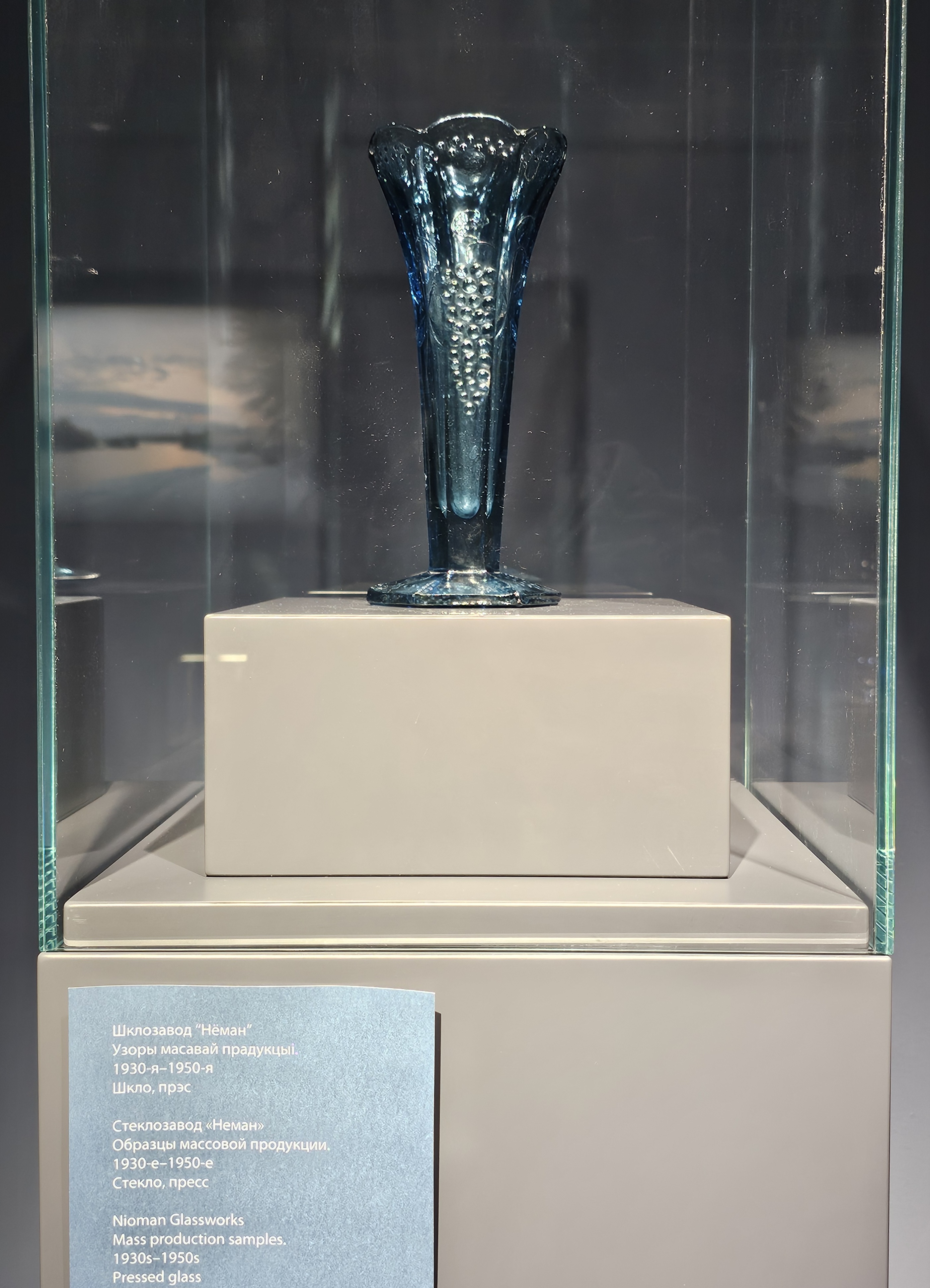
Pressed glass: Molten glass forced into a mould. Look for mould seams (usually vertical), soft or sharp relief depending on mould quality, and a fire-polished or ground rim. Czech and German pressed Deco often carries high-relief grapes, sunbursts, geometric panels, and figural motifs. Photograph seams and the inside surface—pressed pieces show the reverse of exterior relief more clearly than cut glass does.
Moulded art glass (Lalique-type): Higher-quality mould work with fine detail, often signed. Frosted grounds with polished highlights are common. Capture low-angle raking light across relief so feathers, fur, or architectural ribs cast shadows.
Acid etching and cameo: Layers of coloured glass cut or etched back to create contrast. Photograph the edge of the design where colour layers meet; genuine cameo shows depth, not printed or painted contrast.
Cut crystal: Sharp, bright facets from wheel cutting. Deco cutting tends toward geometric panels and stepped mitres rather than Victorian hobnail overload. Capture sparkle under a single light source so facet edges read clearly.
If decoration looks painted on, printed, or soft like a rubber stamp, slow down. Period Deco glass decoration is almost always in the glass or cut into it—not a surface graphic.
Maker Marks, Acid Stamps, and Country-of-Origin Clues
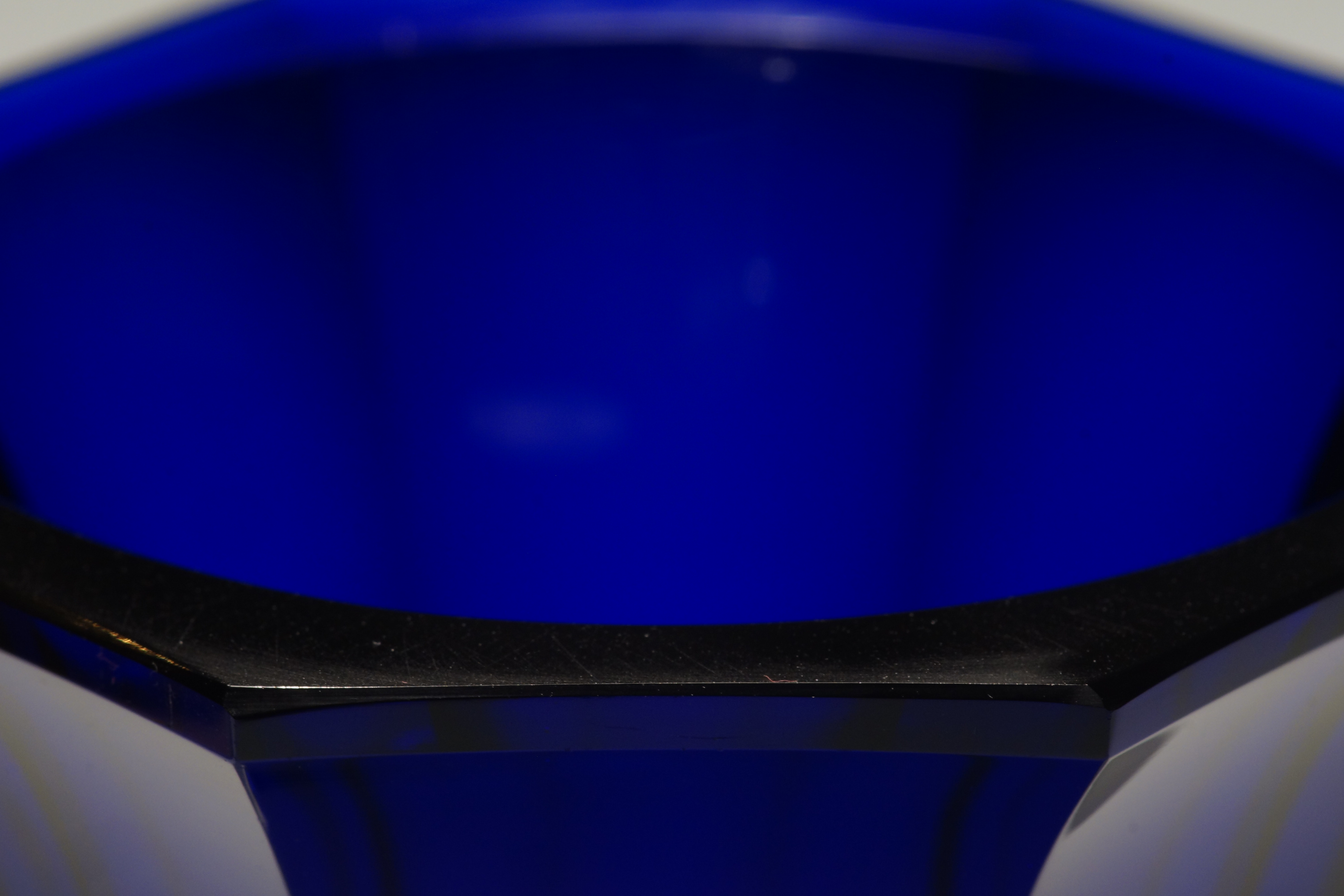
Signatures transform a "nice Deco vase" into a researchable object. Photograph every potential mark with fill-the-frame macro and raking light:
Lalique: Moulded, etched, or engraved "R. Lalique," later "Lalique France," with script and block variants across decades. Pre-war R. Lalique marks are the high-value tell; post-war Lalique continued many designs.
Daum Nancy: Crossed signature marks, often acid-etched. Cross-check spelling and placement against known examples.
Sabino, Etling, Verlys: French opalescent and moulded marks; Verlys has French and American production stories that affect value.
Czech marks: "Czechoslovakia" in various scripts on export pieces; Moser and other luxury houses used acid stamps or paper labels long gone. Hoffmann-designed Moser colour pieces are identified as much by form and colour as by surviving marks.
British and American factory marks: Bagley, Davidson, Jobling, Cloud Glass attributions, Cambridge, Consolidated—sometimes moulded, often identified by pattern reference books when unmarked.
No mark does not mean fake. Many authentic Deco pressed pieces were unmarked or lost paper labels. Marks that look laser-etched, painted in modern fonts, or stuck on as cheap foil are the opposite problem—see our broader guide on how to read maker's marks and hallmarks for habits that transfer across materials, and the porcelain-focused sibling how to identify porcelain china marks from a photo for macro photography technique.
Base, Pontil, Rim, and Construction Tells
Flip the piece (safely, on a padded surface) and photograph the base. Ground and polished pontils, moulded circular bases, and factory-polished rims all speak to method and quality. Sharp mould seams that continue under the base, rough "stuck" glass, or a perfectly flat modern machine base can help separate studio and factory work from recent giftware.
Rim finishing matters. Fire-polished rims feel smooth; ground rims show a flat, matte band; chipped rims that have been "polished down" change the profile and can erase a moulded signature near the lip. Photograph chips, bruising, and any grinding rings honestly—condition drives Deco glass prices hard because collectors display these pieces under light.
Weight in hand is hard to show in a photo, but you can imply it: thick walls visible at the rim, heavy base shadows, and a stable stance all support a quality pressed or moulded piece versus thin modern soda-lime giftware.
Red Flags: Reproductions, Fantasy Pieces, and Overcleaned Surfaces
The Deco glass market has three trouble tiers: honest later reissues of period designs, fantasy pieces never made in the 1920s–30s but styled to look the part, and outright fakes with forged signatures.
1. Soft, soapy mould detail. Period high-relief pressed and moulded glass holds crisp edges. Worn originals soften evenly; bad modern moulds look mushy from day one.
2. Wrong colour for the form. Some colours were rare or unused by certain factories. A "Lalique" form in a neon carnival colour should invite cross-checking against catalogues.
3. Fantasy signatures. "R. Lalique" acid-stamped on a shape Lalique never made is a classic trap. Match mark and model together—not either alone.
4. Artificial wear. Random scratching on high points only, or dirt painted into crevices while polished faces stay factory-new, suggests staged age. Honest wear follows handling: rim, base ring, and inner neck.
5. Too-perfect "mint" online photos. Studio lighting can hide bruises and make modern glass look magical. Ask for daylight shots of the base, rim, and any signature before you buy.
For the wider mindset of comparing construction claims against what the object actually shows, see antique vs reproduction: how to spot the difference.
A Practical Photo Checklist for Art Deco Glass
1. Full silhouette, straight-on. Plain background, true proportions, no wide-angle distortion.
2. Three-quarter and profile. Show depth, wall thickness, and handle or finial geometry.
3. Detail of decoration. Raking light across pressed, etched, or cut relief.
4. Colour reference. Daylight shot with a white card in frame; optional backlight for opalescent or cased glass.
5. Base and pontil. Fill the frame; include any mould numbers or ground areas.
6. Rim and lip. Chips, grinding, and thickness at the edge.
7. Every mark. Macro plus one context shot showing where the mark sits on the piece.
For lighting, focus, and multi-angle habits that apply across antiques, use how to photograph an antique for identification.
How Antique ID Fits Into Deco Glass Research
Photo-based identification works best when silhouette, colour, and surface detail are sharp. That is where Antique ID helps: upload a disciplined set of angles, review the suggested maker/style match and value range, then decide whether to walk, negotiate, or escalate to a specialist dealer or auction house.
AI is strong at sorting bulk lots, flagging obvious modern giftware, and suggesting which reference books or catalogue raisonnés to open next. It is weaker on rare colour variants, remarried lids, and forged signatures that need hands-on scrutiny. No app replaces a specialist for high-value Lalique, Daum, or museum-grade Czech pieces when insurance, probate, or a major purchase is on the line.
Use the estimate as a research starting point. If the range is high enough that a mistake would hurt, pay for a human opinion. That honesty keeps collecting sustainable.
Reselling Art Deco Glass Without Surprises
Once you know what you have, match the channel to the piece. Mid-market pressed Deco moves on general marketplaces with excellent photos and honest condition notes. Named French and Czech luxury glass does better through specialist dealers, curated auctions, or collector forums where buyers recognise pattern names.
Disclose chips, polishing, replaced lids, and uncertain attributions up front. Collectors of glass are ruthless about condition because light displays every bruise. For platform strategy across categories, the habits in best antiques to resell still apply: align buyer expectations, packing skill, and price band.
Pack like a professional—double box, float the piece, never let glass rattle. One shipping disaster erases the margin on a good find.
From Photo Pack to Confident Decision
Identifying Art Deco glass from photographs is a learnable skill. Capture silhouette, colour, decoration technique, base, rim, and marks with sharp, well-lit shots. Match geometry and finish to the 1920s–30s vocabulary. Cross-check signatures against known models. Watch for soft moulds, fantasy marks, and staged wear.
Run a complete photo set through Antique ID for a fast identification and value range. Remember the honesty rule: that estimate is research help, not a certified appraisal. For high-stakes purchases, condition disputes, or insurance schedules, bring in a qualified specialist.
Do that consistently and Deco glass stops being a blur of "geometric blue vases." You will recognise quality mould work, separate period pressed glass from modern fantasy pieces, and know when a single out-of-focus marketplace photo is not enough evidence to bid.
Identify antiques instantly with AI
Use the Antique ID app to photograph items, uncover their history, and estimate value before you buy or list them for sale.
Download Antique IDRelated articles
- How to Photograph an Antique to Identify & Value It Discover expert photography techniques to capture antiques for accurate identification—from lighting and angles to hallmarks that unlock value ranges.
- How to Identify Antique Porcelain and China Marks From a Photo A practical guide to finding, photographing, and reading porcelain and china marks—factory stamps, date codes, and decorator signatures—plus when a photo ID helps identify what you have and a value range.
- Antique vs Reproduction: How to Spot the Difference Practical clues that separate genuine antiques from modern reproductions—joinery, wear, marks, materials—and how a clear photo helps you decide what to buy, keep, or skip.
- How to Identify Antiques: Expert Tips to Recognize True Value Learn to read wear patterns, understand historical construction techniques, and decode maker's marks to authenticate antiques like a pro.
- 7 Best Platforms to Resell for Profit in 2025 Compare eBay, Amazon, Poshmark, and other top marketplaces, plus pro tips to maximise margins on your vintage and collectible finds.